
At The Edge Of Town

Tim Smith & His Daughter Zoe’s Vision for Munds Park’s Front Door
When you pull off I-17 into Munds Park, you pass a stretch of land that looks, at first glance, like any other commercial edge along a highway. Gravel, trees, a wash cutting through it, and movement of earth that will soon reveal itself.
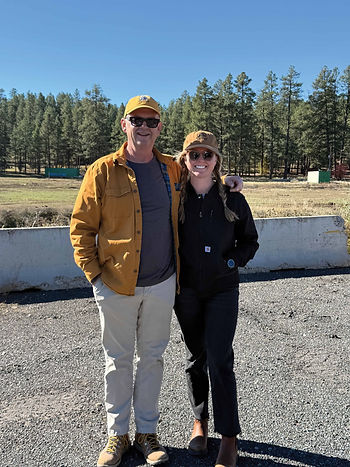
For Tim Smith and his daughter Zoe, that 26-acre parcel west of Munds Park, south of soon to be Satchmo's Roadhouse BBQ, is not just another stretch of interstate frontage property. It is the land they have been quietly shaping, and the spot where they believe Munds Park could gain both practical storage and something it has never quite had: a shared, thoughtfully planned front porch.
Tim bought the land around 1999. He has made a living as a builder and developer, and he likes to joke that floodplains have followed him from job to job. This one is no different. The maps have shifted twice since he closed on the ground, so every shovel of dirt is tested against charts and elevations.
“It looks simple when you drive by,” he said, “but there is a lot going on under the surface.”
The First Phase: RV & Toy Storage
The only part of the long-term vision currently underway is an RV and toy storage facility at the back of the property. The plan is to start with open-air spaces, then add enclosed storage buildings as demand grows. Around 200 spaces are included in the initial layout, though that number may shift based on what the community needs. The Smiths hope to open the facility in early 2026 and will share updates through the Pinewood News. Reservations are already being accepted. See the ad on page 14 for contact information.
The storage facility is not designed to be a field of exposed rigs. A seven-foot perimeter fence of corrugated metal and expanded wire surrounds the space, offering a clean, modern appearance. The entire facility will be gated, with keypad access, security cameras, and operating hours generally set from morning into early evening.
Lighting is a frequent concern in a dark-sky community, and Tim has made it a priority from the start. The planned fixtures follow Flagstaff’s dark-sky standards, using low-mounted, amber-colored lights that reduce glare and limit skyglow. Only a small number of poles will be installed, just enough to ensure safety and visibility without flooding the area with light. The goal is to protect the night sky, not light up the forest.
“We do not need to light this up like a shopping center,” he said. “We just need to see who is there and keep it safe at night.”
When the Smiths first drew up the concept, they pictured Phoenix area residents storing their rigs here instead of dragging them up and down the hill every weekend. Early phone calls and inquiries have surprised them.
“So far the interest seems to be right across the street,” Zoe said. “A lot of Munds Park residents are tired of losing their carport or garage to a fifth wheel all summer.”
Some of the calls have come from owners of high-end diesel coaches who want a secure, screened home for their investment. Others are simply looking for a place to park an extra vehicle so the driveway is usable again.
Tim believes that shift could quietly improve the look of Munds Park neighborhoods.
“If we can move some of the bigger units out of side yards and shared driveways and into a lot that functions well, it cleans up the streets,” he said. “That feels like a win for everybody.”
Respecting the Floodplain
When construction equipment rolled in and trees started coming down, many in the community wondered what was happening along the wash. Tim says the changes were part of a calculated plan to follow floodplain regulations and improve water flow, not disrupt it.
According to county flood rules, a landowner can raise ground in one area only if they remove the same amount of soil from another. This ensures the wash still has the capacity to carry stormwater during heavy rains. On this property, that meant digging out one section of the floodplain so another section, where the RV storage pad will go, could be built up without increasing flood risk.
“It’s basically a trade,” Tim explained. “We remove material from one spot to deepen the channel, and that allows us to raise another area while keeping the water flow the same.”
The elevated pad, he said, remains about a foot below the mapped flood level and should safely accommodate RVs without affecting nearby properties. As for the trees that were removed, Tim clarified that they were located outside the official flood zone and were cleared only as part of the necessary grading work.
“I get why people are concerned when they see trees come out,” he said. “But in this case, it was done carefully and by the book. The goal is to manage water properly, not push it into someone else’s yard.”
Exploring Options for a Shared Community Space
Ask Tim what comes after the storage yard, and he doesn’t pull out a glossy master plan. He talks instead in sketches and “what ifs.”
Standing on the open ground near the highway, Tim gestures toward a natural bowl formed by the wash and grading work, with a tree-lined slope rising behind it. “This could be an amphitheater one day,” he said. “Stage at the bottom, trees as the backdrop. Movies, music, community events. It’s already shaped for it.”
Then the conversation turns to food.
This year he planted his first real garden on the hill above, just to see what would happen. Pumpkins sprawled. Vegetables came in faster than his family could eat them. Friends went home with armloads.
“I have never gardened in my life,” he admitted. “We still ended up with more than we needed. It felt like something we should offer the community.”
The Smiths imagine a community garden where locals can reserve plots, share water, and grow food together. Nearby, the flat open space could host a farmers’ market with real parking, rather than vendors setting up in improvised lots. They are clear about one thing: they do not want to run the market themselves.
“We know enough to know what we do not know,” Zoe said. “There are already people in the region who run true farmers’ markets with real produce and quality vendors. We would rather work with someone like that and focus on being good land stewards.”
Over time, Tim can see the strip becoming a small-town center of sorts. A café that serves local food. A place for yoga classes. Shared paths that connect to the forest instead of random cuts through fences.
“What Munds Park does not really have right now is a common meeting place that feels like the heart of town,” he said. “We have the room here to try to build something like that if people want it.”
They are big fans of models that already exist nearby: a Rimrock shop that roasts its own coffee and stocks local eggs, produce, and prepared foods; Camp Verde farms that sell directly to families; and the growing number of restaurants in the region that focus on fresh, lighter meals.
“Munds Park is full of people who hike, bike, and want to feel good,” Zoe said. “The land here could support that kind of lifestyle in a practical way.”
Respecting the Land & Setting Boundaries
Owning a wide-open parcel next to the woods comes with its own troubles. Over the years, drivers of off-road vehicles have cut locks, sliced fences, and even driven over gates to reach the forest illegally. They tear up the ground and let cattle out. They break things because they want a shortcut.
That history shapes how the Smiths think about their space. If they add gardens or markets, they will likely create pedestrian entrances or turnstiles to keep vehicles out.
“We want people to enjoy this place,” Zoe said, “but we have to protect it too. There is a balance between open and overrun.”
Shared Easement, Shared Frustrations
There is an old easement running in front of the Chevron, Agee’s (now no longer in business), and neighboring parcels. You cannot talk about this land without touching it.
According to documents Tim has reviewed with his attorney, a 50 to 60-foot-wide ingress and egress easement was created decades ago to guarantee access across the frontage to several parcels and to public utilities. It runs parallel to the highway and includes the strip where Agee’s and Chevron customers often park.
For many years, that easement functioned quietly in the background. As businesses grew busier and Munds Park saw more visitors, the same strip began filling with cars and trucks. When Tim leased part of his land to a construction company during the interstate project, their heavy rigs sometimes could not get through. Utility vehicles faced the same squeeze.
From Tim’s point of view, that turned a legal access question into a safety concern. He says he asked that parking be pulled back, that “no parking” signs be posted along the easement, and that he even offered to lease a portion of his own property as a fenced seasonal parking area for Agee’s and their customers. The offer, he says, was declined by the property’s owner, representative.
Meanwhile, petitions have circulated in the community in support of continued parking near the restaurant, and many residents understandably worry about what changes to that strip could mean for a local business they enjoy.
As of this writing, the legal questions about how the easement can be used and by whom are being handled by attorneys. The Smiths say their goal is to secure clear access for their land, their tenants, and utility providers, while leaving room for nearby businesses to find workable parking solutions on land outside the access corridor.
Looking Ahead
For now, what is actually happening on the ground is straightforward. RV and toy storage will come first. Munds Park residents will have one more option to store their rig currently occupying the carport.
The rest is still a conversation.
Community gardens. A farmers’ market with real parking. Maybe an amphitheater. Maybe a handful of small local businesses. None of it moves forward without partners and neighbors. None of it works without people who want open space, good food, and a place to gather.
“This place has a lot of potential,” Zoe said. “If we do it right, it can become something that serves the whole community. A place for people to come together, enjoy good food, connect with neighbors, and enjoy themselves. That is our hope.”

Comments